History and art in Calabria — coast by coast heritage guide
Calabria's heritage does not sit in one inland cluster far from the sea. The coast often opens directly into Magna Graecia parks, Byzantine survivals, Norman and Aragonese strongholds, manuscript treasures, and contemporary art sites, so where you stay changes the whole culture itinerary.
If you're staying on the northern Tyrrhenian, culture is distributed rather than concentrated in one monumental site. The Riviera dei Cedri rewards travellers who want their cultural days to mix hill towns, prehistory, and local character rather than one dominant museum.
Worth Knowing
Distributed heritage, not one dominant museum
The Riviera dei Cedri rewards travellers who enjoy assembling a cultural picture through towns, small sites, prehistory, and landscape rather than through one dominant institution. There is no Sibari or Reggio here — the appeal is variety and specificity, and the coast suits curious generalists.
Worth Knowing
Keep the beach in the day, not the whole day
The coast is at its best when sea remains part of the day but not all of it. Morning beach, afternoon inland, evening in town is a pattern that works unusually well here and leaves room for hill villages and small museums without turning the trip into a transfer-heavy circuit.
From the coast you can reach one of Calabria's major prehistoric sites near Papasidero. The Grotta del Romito holds a Bos primigenius engraving dated to around 17,000 years ago — one of the most significant Palaeolithic artworks in the central Mediterranean. If you are tired of church-and-castle repetition, this stop opens the district into a completely different historical register.
Inland
Aieta, Morano Calabro, Civita, and the hill-town belt
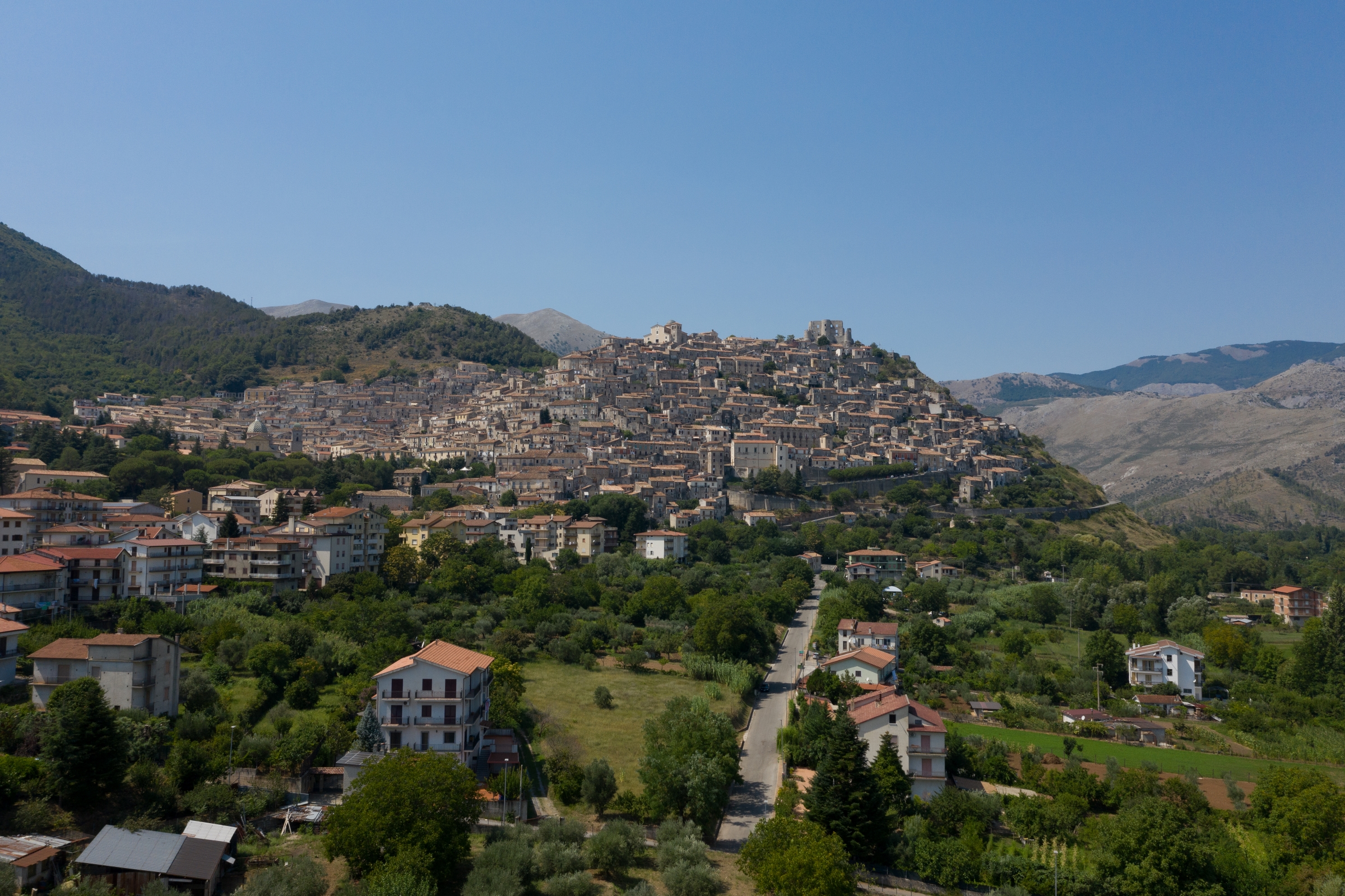
Morano is the most visually striking of the inland towns — a presepe-like form under the castle, tightly stacked on the hillside. Civita adds the Arbëreshë dimension: a village where the community has kept its Albanian language, customs, and ritual calendar alive for five centuries. Aieta and Oriolo fill out the belt with medieval and Renaissance texture. From Praia, Scalea, or Diamante these are all well within an afternoon's reach.
The Sites
Diamante, Cirella, and Museo del Cedro
Diamante's mural old town and the island ruins at Cirella give the coast a lively cultural texture rather than one headline monument. The Museo del Cedro in Santa Maria del Cedro adds something smaller but clarifying — it explains why this particular coastline has the name, cultivation history, and ritual dimension that it does. Together they are the kind of half-day that teaches you something genuinely specific rather than checking a cathedral box.
Inland
Pollino UNESCO Geopark and the ancient beech forests
The Pollino massif behind this coast holds two separate UNESCO designations. The Global Geopark (recognised 2015) documents Tethys Ocean floor geology at Timpa della Murge and gives the Raganello Gorges and Lao valley the weight of formally recognised geological science. Two forest clusters within the park — Cozzo Ferriero and Pollinello — are components of a UNESCO World Heritage property on ancient primeval beech forests; the trees at Pollinello have been dated to over 620 years, making them the oldest documented beeches in Europe.
Tyrrhenian · Gulf of Sant'Eufemia
Riviera dei Tramonti
The Riviera dei Tramonti is not a coast to choose for dense beach-town heritage on the shoreline itself. It is a coast to choose if you want fast access to central-Calabria culture while still sleeping by the sea.
Worth Knowing
A hinge coast, not a heritage district
A dedicated archaeology or Byzantine specialist will find better single-district choices elsewhere. But for groups with mixed priorities — or travellers who want to keep two or three cultural districts alive simultaneously — the Riviera dei Tramonti is one of Calabria's most strategically intelligent choices.
Worth Knowing
Choose it for reach, not for shoreline monuments
There isn't much heritage on the waterfront itself. Choose this coast because from here you can reach Serra San Bruno, Taverna, Catanzaro, or the Ionian side in the same day. That movability is the payoff.
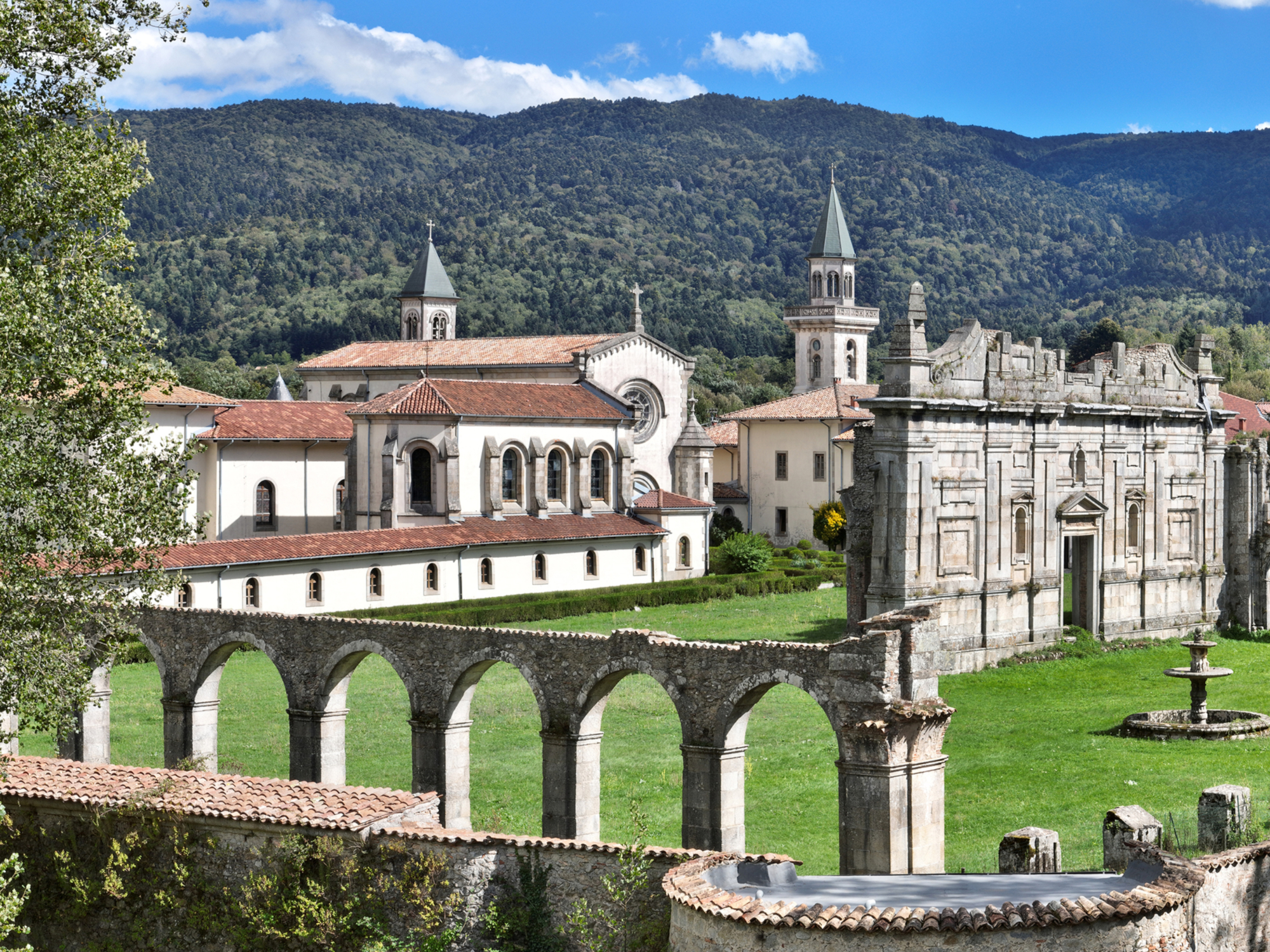
This is the great inland visit from the gulf and one of Calabria's deepest monastic and spiritual environments, set inside wooded landscape that feels completely removed from the open beachfront. The attached museum — 22 rooms explaining the otherwise inaccessible clausura — elevates the stop beyond scenery. It gives the monastic life concrete form and is the reason the site rewards heritage travellers, not only those seeking spiritual quiet.
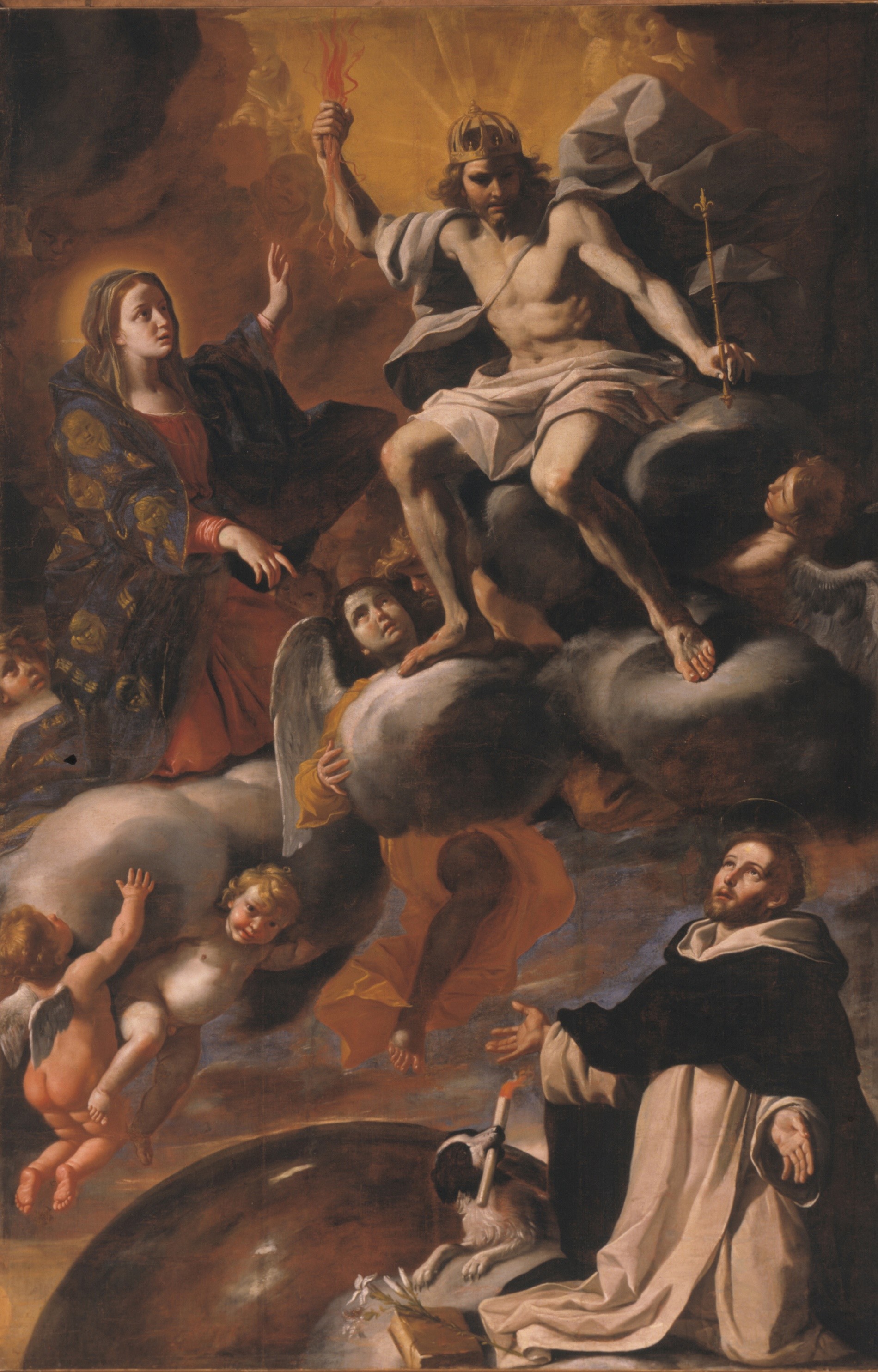
Because the gulf sits in the middle of the peninsula, it is one of the simplest west-side places from which to reach the Mattia Preti painting district. Taverna turns the central interior into a serious baroque painting route rather than a generic inland stop — and from the Riviera dei Tramonti that route is shorter than from almost any other coast.
The Sites
Lamezia and the central-Calabria hinge
Lamezia is useful less as a single monumental stop than as the point that keeps the region movable: coast, inland monastery, Catanzaro culture, or cross-peninsula shifts all stay easy from here. If you use the Riviera dei Tramonti for a stay, you're buying access rather than collecting local monuments — and that access is genuine and rare on this coast.
Inland
Catanzaro and central-Calabria culture
Catanzaro's museums and city life broaden the district in ways that purely beach-famous coasts cannot match. Mixed-interest groups do particularly well here — one traveller can take the culture day while another stays at the beach, without anyone driving long distances.
Tyrrhenian · Vibo Valentia
Costa degli Dei
The Costa degli Dei becomes culturally richer when you stop treating it as only beautiful bathing water. Tropea's urban drama, Pizzo's history, Piedigrotta, and inland Zungri give the district far more depth than its postcard reputation suggests.
Worth Knowing
Accessible culture without heavy inland commitment
Few Calabrian coasts make sea-plus-history days feel so easy on a first trip. If you want cultural stops that fit naturally into a beach holiday without demanding heavy inland drives, the Costa degli Dei answers that need clearly. The sites are close, compact, and easy to sequence.
Worth Knowing
Use town days and cove days differently
Tropea and Pizzo reward full town-and-culture days. The cove sectors are better used for shorter sea sessions around them. That split keeps the district from feeling repetitive and lets history and swimming occupy their proper proportions.
Pizzo gives the coast a compact cultural cluster that first-time visitors consistently underestimate. Castello Murat is where Joachim Murat — Napoleon's brother-in-law and King of Naples — was captured and shot in 1815, turning the castle from a generic fortification into one of southern Italy's most direct Napoleonic-era sites. The combination of castle history, seafront town life, and Piedigrotta makes Pizzo one of the highest-return stops on the coast.
Inland
Zungri and the rupestrian settlement
Zungri changes the whole reading of the district, shifting it from postcard sea to carved-landscape history in one short inland move. The cave settlement gives the Costa degli Dei a pre-Christian story that most visitors never associate with Calabria's most photogenic beach coast.
The Sites
Tropea, Santa Maria dell'Isola, and Piedigrotta
Tropea matters not just as a beach town but as one of Calabria's finest examples of a cliff settlement whose urban form is inseparable from the sea below. The sanctuary on its rock and the layered old town are enough to make it a serious heritage stop, not just a famous view. Piedigrotta — the rock-carved cave church right by the shore at Pizzo — adds one of the most unusual sacred spaces in the district, literally chiselled from the volcanic cliffside.
Inland
Monte Poro and the inland depth
The Monte Poro plateau gives the district village depth and a slower inland pace that balances the polished beach image. For travellers staying more than a few nights, the road inland opens toward Serra San Bruno and its powerful sacred-monastic world — which makes the Costa degli Dei a better cultural stay than its beach-first reputation suggests.
Tyrrhenian · Strait coast
Costa Viola
Costa Viola is one of Calabria's great culture coasts because the maritime atmosphere is backed by the MArRC in Reggio, the Bronzi di Riace, Scilla's castle-and-village scene, and the inland dramatic settlements of the far south.
Worth Knowing
A dense short-stay culture coast
Because the character is intense and concentrated, the Costa Viola often works best in a two-to-four-day stay rather than as a broad week-long circuit. The ideal pattern is museum, Scilla, one dramatic inland visit, then time to absorb the Strait atmosphere itself.
Worth Knowing
Three UNESCO designations converge here
The Aspromonte Geopark (2021) covers the immediate inland hinterland. The Varia di Palmi — a 17-metre processional structure carried by 200 bearers each August — is a UNESCO Intangible Cultural Heritage inscription and one of the most visually complete such events accessible from any Calabrian coast. Reggio Calabria joined the UNESCO Global Network of Learning Cities in 2022. This concentration of official heritage is almost entirely missed by visitors focused on the scenery.
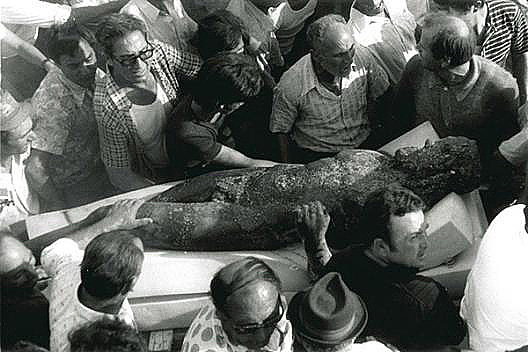
Reggio Calabria gives the coast one of the Mediterranean's defining museum experiences. The Bronzi di Riace — two Greek bronzes recovered from the Ionian seabed near Riace in 1972 — are widely considered the finest surviving examples of original Greek bronze sculpture in the world. The MArRC museum turns the far-south trip into something much larger than a beach holiday by placing the whole region inside first-rank classical art.
Inland
Pentedattilo and the ghost village
Pentedattilo is one of the strongest inland counterpoints to the coast: dramatic setting, abandonment memory, and a completely different emotional register from the waterfronts below. If you're staying on the Costa Viola, this inland visit turns it from a museum coast into a full far-south cultural landscape.
The Sites
Scilla, Chianalea, and the castle
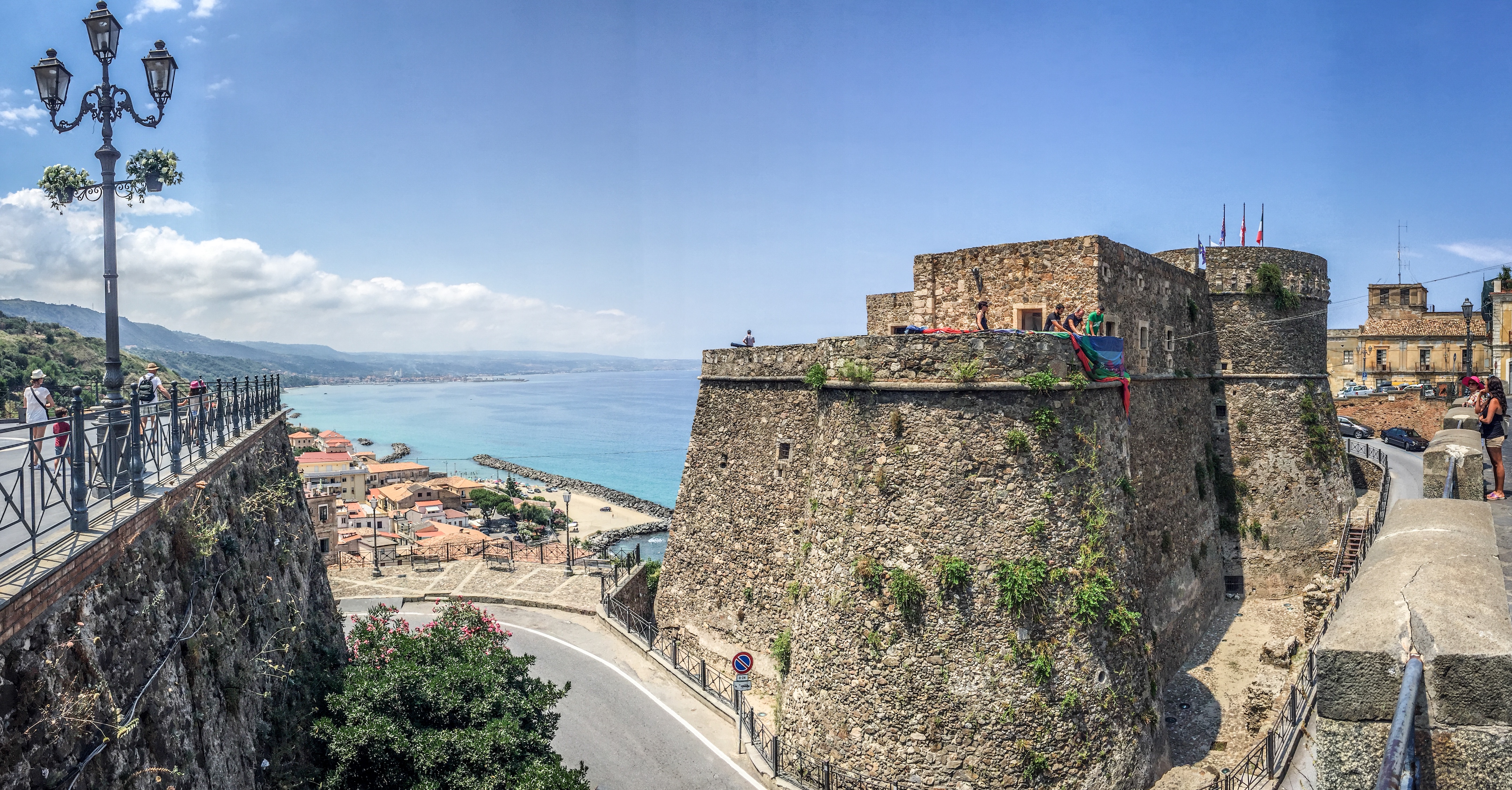
Scilla matters because the site is complete: beach, village, castle, fishing culture, and Strait mythology all in the same compact coastal frame. Chianalea — the fishing quarter built directly over the water — is one of Calabria's most atmospherically coherent places, where setting and historical form reinforce each other perfectly.
Inland
Seminara and the living ceramic tradition
The ceramic tradition of Seminara gives the district a living-art dimension that complements the museum and village material. It shifts the coast away from pure archaeology into still-active making culture — useful precisely because it prevents a week from reading only as antiquity and old villages.
Ionian · Southern Locride and Grecanica
Costa dei Gelsomini
The Costa dei Gelsomini is among Calabria's richest heritage coasts because Locri, Gerace, Kaulon, Bova, and the Grecanic villages all sit behind a beach district that most visitors still underestimate culturally.
Worth Knowing
Best for longer sea-plus-history stays
Because the district has multiple strong nodes rather than one headline site, it improves over several days and rewards slower planning. This is one of Calabria's least efficient coasts for rushing and one of its best for sustained cultural depth.
Worth Knowing
Choose your base by cultural gravity
Roccella and the central Locride suit archaeology best; farther south is better for Grecanica and Byzantine atmosphere. The coast is too long to treat as one interchangeable strip, and where you sleep should reflect what you're actually planning to see.
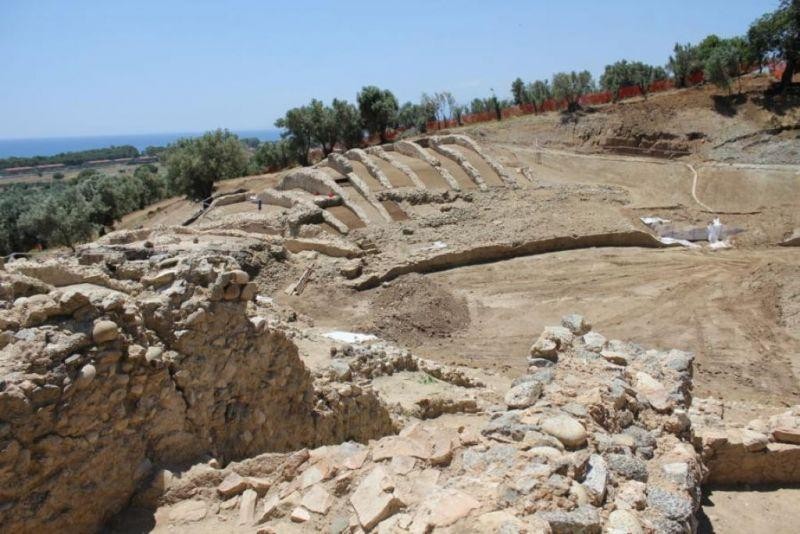
Locri gives the coast one of the region's major archaeological sites. Kaulon at Monasterace keeps the relationship between ancient city and shoreline especially vivid — the Casa del Drago mosaic is a pinnacle of Hellenistic mosaic technique, and part of the ancient city is submerged, making Kaulon one of Calabria's principal references for underwater archaeology. If you're staying on this coast and you care about Magna Graecia, these two sites together make a seriously rewarding archaeology day.
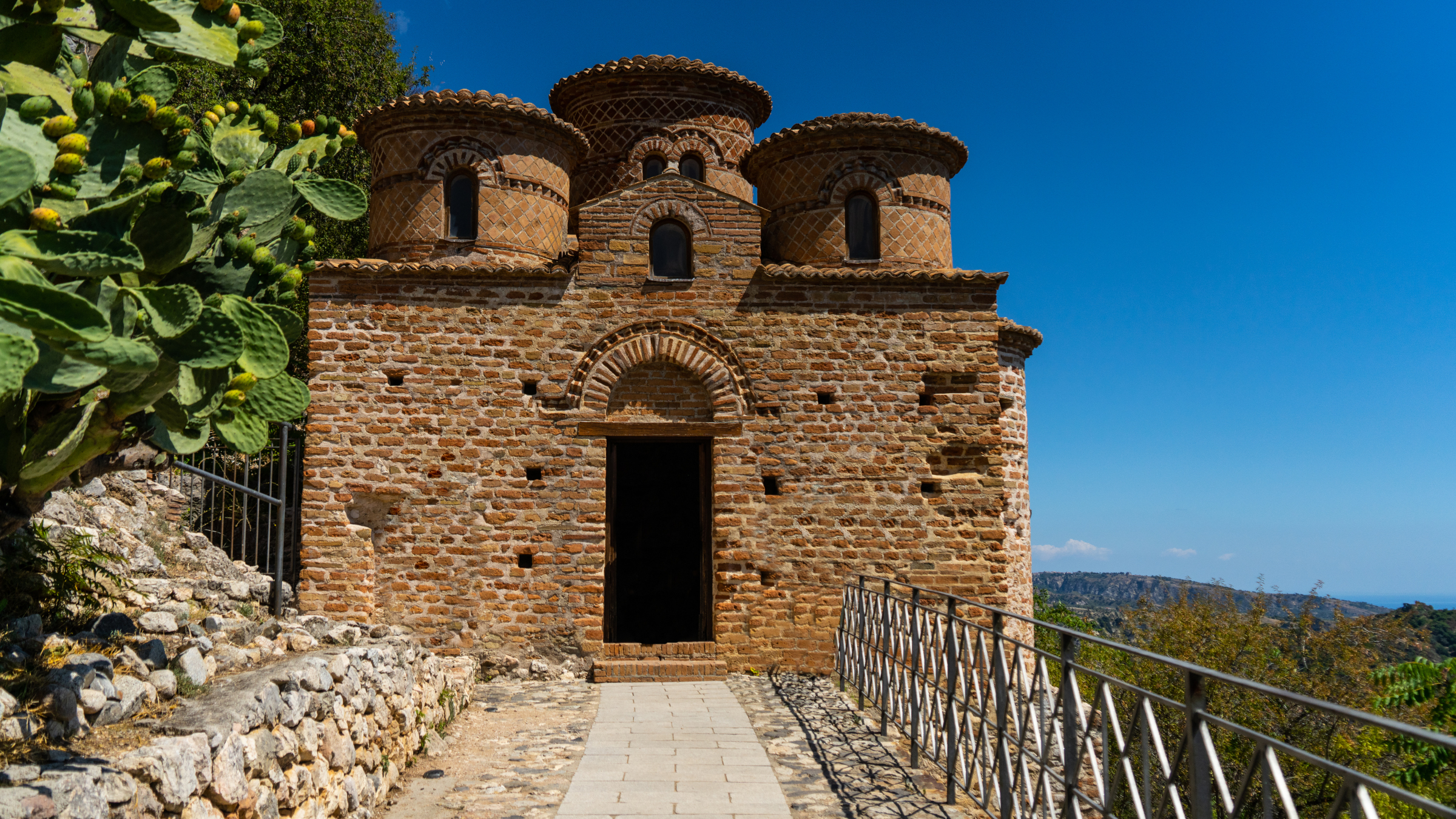
The Cattolica di Stilo brings Byzantine architecture into one of Calabria's most compact and striking forms: a 10th-century five-dome church on a hillside, the best surviving example of Basilian monastic architecture in the region. Bova and the Greco-Calabrian villages add a living linguistic and cultural continuity — the Griko-speaking world — that no beach itinerary can reveal by itself. Both the Cattolica and Gerace are formal components of Italy's UNESCO Tentative List, giving this district an officially recognised international significance.
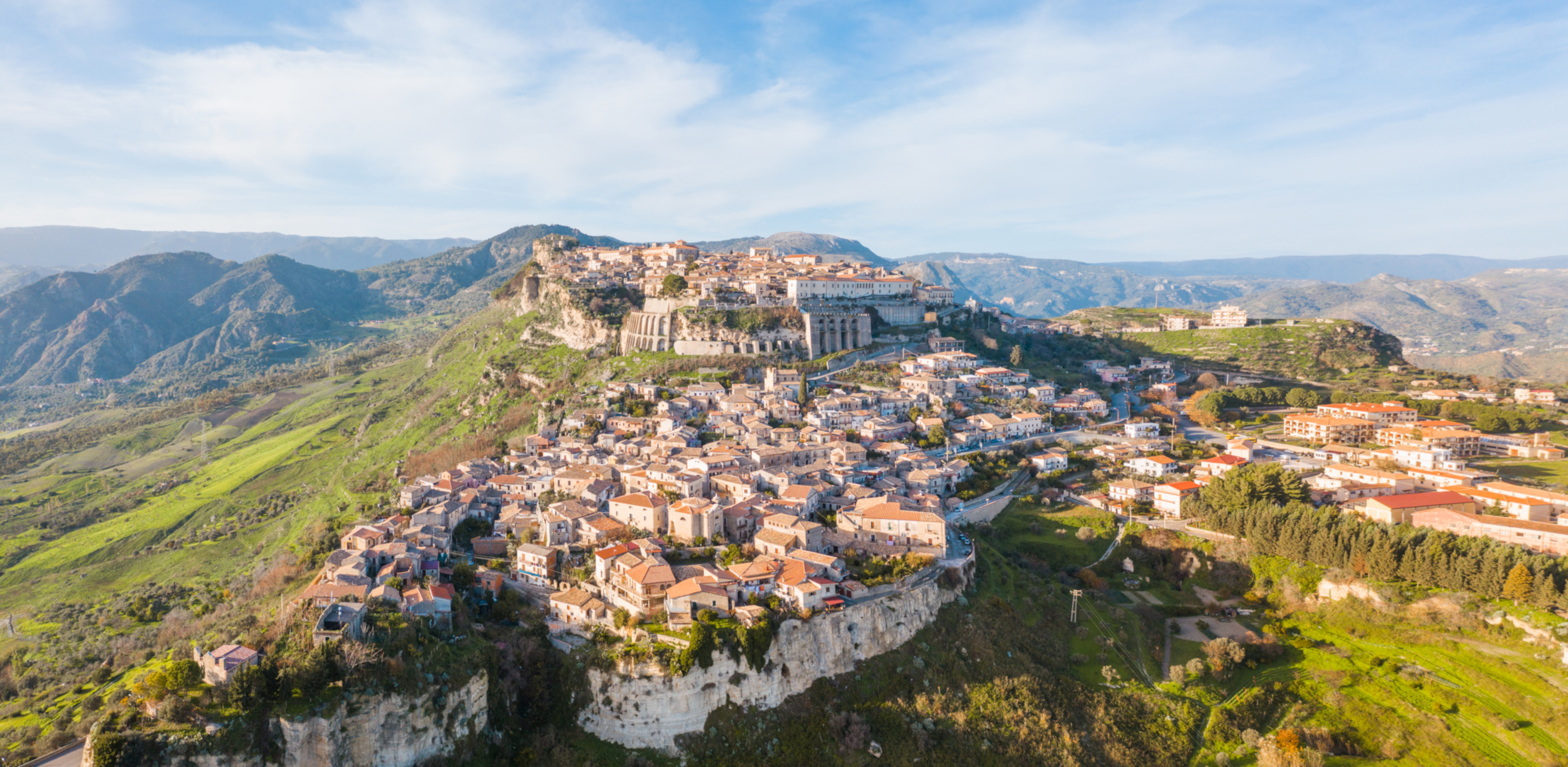
Gerace completes the district by adding cathedral, urban fabric, and one of the most memorable hill-town settings in Calabria. Its Concattedrale di Santa Maria Assunta — a Byzantine-Norman structure with a monumental crypt that is one of the largest in southern Italy — gives the town its sacred weight. It is the essential complement to the coastal archaeology, turning the district into more than Magna Graecia alone.
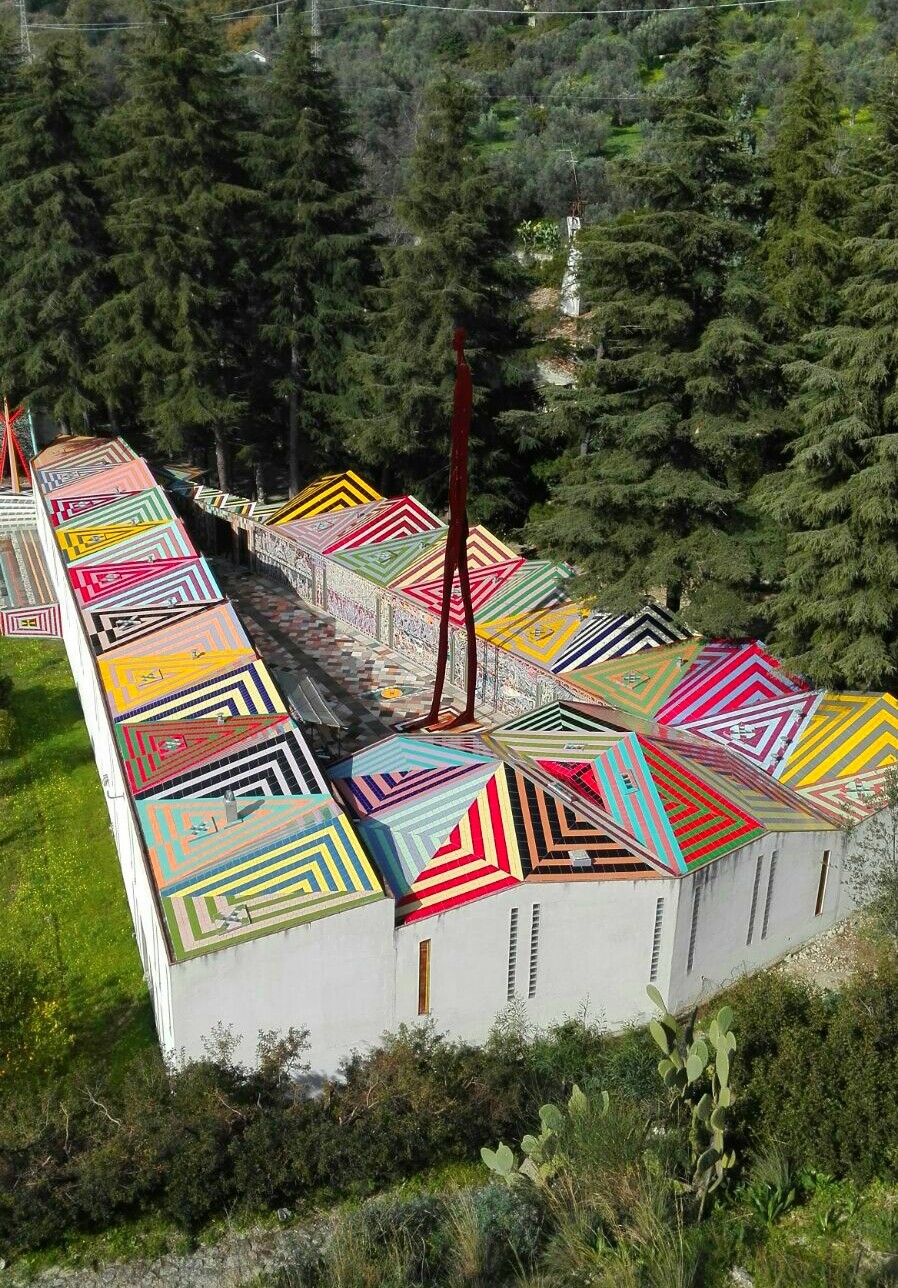
The park-museum at Mammola created by Nik Spatari and Hiske Maas keeps the district from reading only as antiquity and old villages. The Sogno di Giacobbe gives the interior a contemporary-art and experimental dimension that sits in striking contrast to the archaeological weight of the coast below — one of the easiest ways to give a cultural week a sharper visual contrast.
Ionian · Gulf of Squillace and Catanzaro
Costa degli Aranci
The Costa degli Aranci is one of Calabria's best choices for mixed groups because Scolacium, Catanzaro routes, Taverna, and the Stalettì-Cassiodorus sites fit naturally around beach days without difficult logistics.
Worth Knowing
Best for mixed groups and flexible itineraries
Some travellers can stay close to the beach while others take a culture day, then everyone reconverges without wasting the whole day in transfers. That flexibility is the coast's real advantage and makes it one of Calabria's smartest choices for groups with different interests.
Worth Knowing
A strong first Calabria culture coast
If you want a forgiving, regionally balanced itinerary rather than a specialised district, the Costa degli Aranci is a very safe and intelligent choice. Sea, archaeology, art, and major inland designations all sit in workable proportion here — more than on almost any other single coast.
Scolacium is the district's essential site: Greek, Roman, and Norman history in one place, still tied strongly to the coastal geography around it. The surviving basilica and forum make it one of Calabria's best places for reading long historical transition in a single stop — and a half-day here is among the highest-return heritage investments on the middle Ionian.
Taverna turns the middle Ionian into a serious baroque painting district by adding one of Calabria's defining artistic stories. The Museo Civico makes the coast matter not only for archaeology but also for painting biography — and from the Costa degli Aranci, the detour is short enough to fit into a cultural half-day without sacrificing the evening.
The Sites
Cassiodorus, Squillace, and the Stalettì promontory
The coast's scenic coves gain meaning when read against the historical and intellectual memory of the Gulf of Squillace. Cassiodorus — the 6th-century statesman and scholar who retired here to found his Vivarium scriptorium — turned this stretch of coastline into one of the key transmission points for classical learning between antiquity and the medieval world. The Vasche di Cassiodoro, his old fish vivaria now warmed by natural thermal water, give that memory a tangible swimming-and-history logic that is genuinely unusual.
Inland
Catanzaro and the Sila plateau
Catanzaro's museums and city routes broaden the district beyond what beach-famous coasts can normally reach. Behind the coast, the Sila plateau holds a UNESCO Man and the Biosphere reserve covering 357,000 hectares — including the Giants of Sila, a monumental stand of Calabrian Black Pines reaching 40 metres in the Fallistro area, and a landscape shaped by transhumance traditions inscribed on the UNESCO Intangible Heritage list in 2019.
Ionian · Crotonese
Costa dei Saraceni
The Costa dei Saraceni suits travellers who want the story quickly: Hera Lacinia at Capo Colonna, the fortress at Le Castella, and the wider Crotonese frontier all give the district an unusually clear historical shape.
Worth Knowing
Best for compact, high-return itineraries
If you want two or three strong cultural symbols quickly rather than a dispersed heritage week, the Costa dei Saraceni is a very effective choice. The district is easy to explain and easy to remember — Capo Colonna, Le Castella, the museum, Santa Severina. That clarity is its main asset.
Worth Knowing
Pair it with marine-park time and Cirò wine
The best version of this coast mixes archaeology and fortification with one marine-park day and one inland food or wine visit in Cirò country. That balance keeps the district from feeling one-dimensional and makes the full stay feel properly Calabrian rather than purely archaeological.
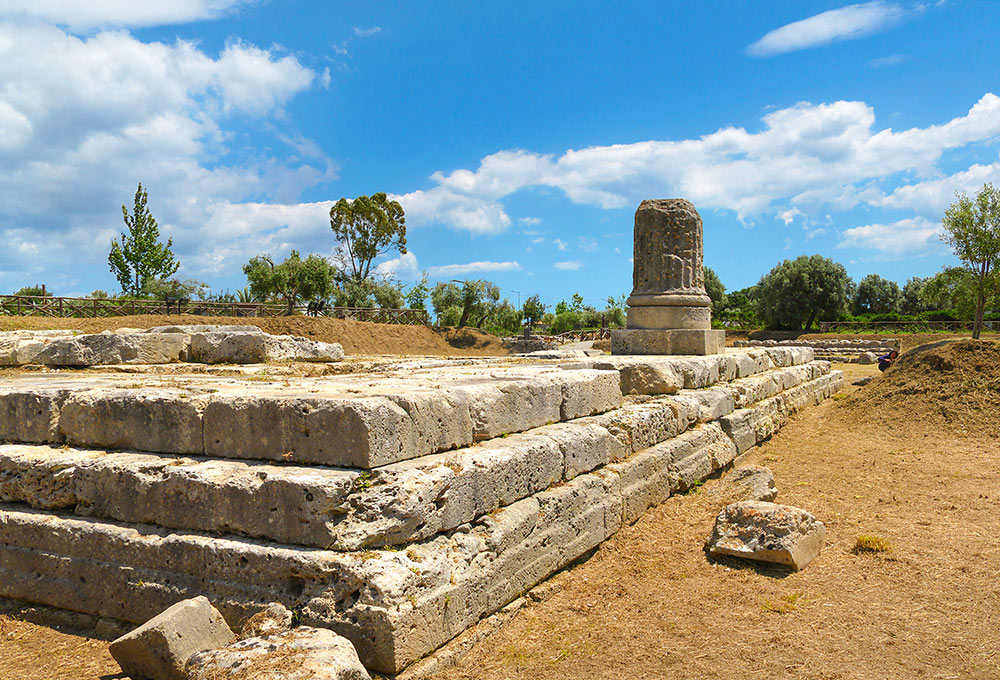
Capo Colonna is one of the great archaeological images of the region and the site that most clearly gives the coast its ancient-sacred character. The remaining Doric column of the Hera Lacinia sanctuary is not just a ruin — it is a full promontory landscape of cult, memory, and sea horizon. Pythagoras used this sanctuary as the intellectual gathering point of the Italic League; Hannibal finally embarked from this same promontory when leaving Italy. Two of antiquity's most resonant names, tied to the same headland.
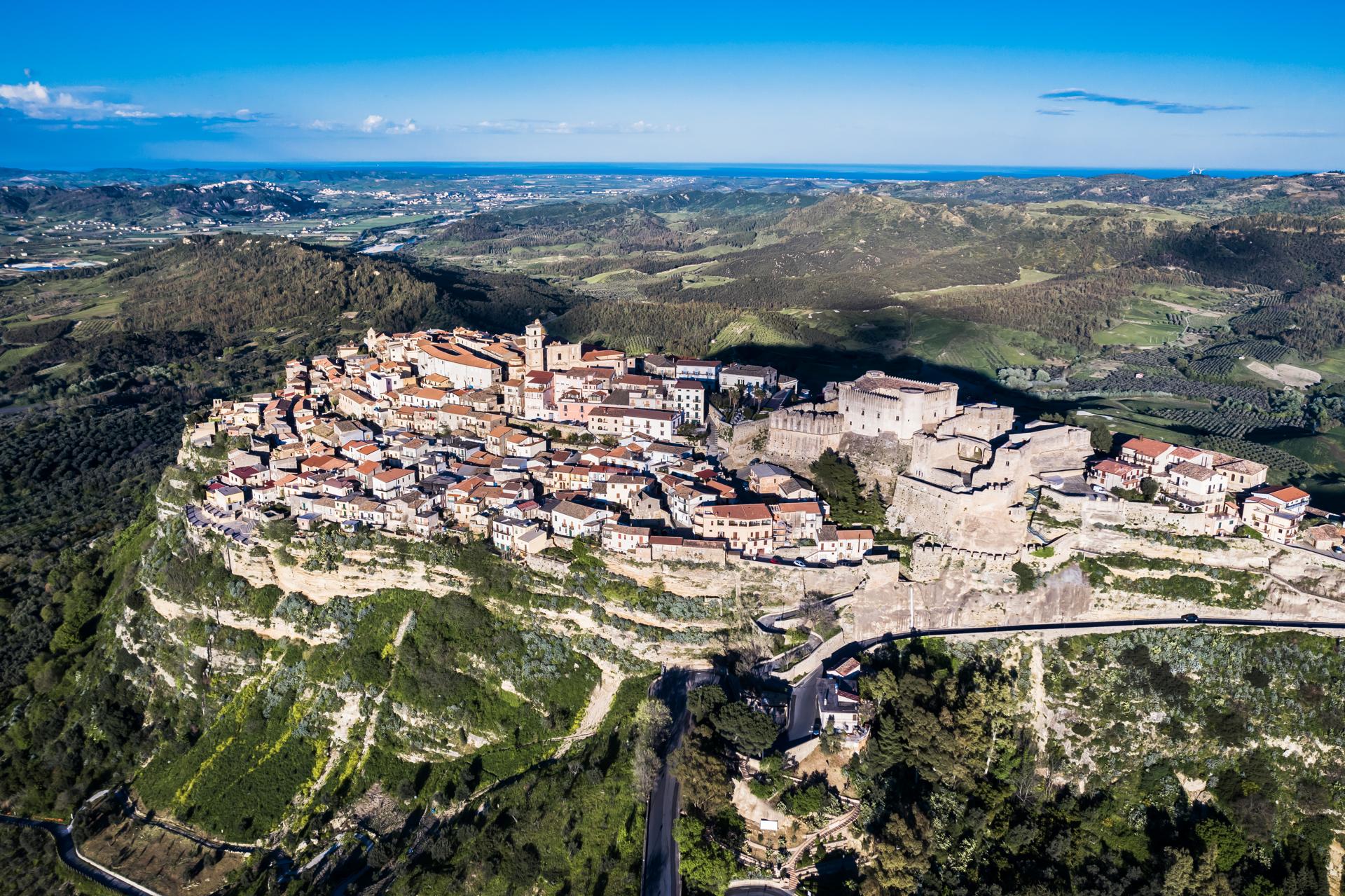
Santa Severina adds one of Calabria's finest inland fortified villages and makes the coast read as a wider Crotonese civilisation belt rather than a single shoreline. The baptistery — recognised as the finest example of Byzantine architecture predating the 10th century on Italian soil and a formal component of Italy's UNESCO Tentative List — the castle, and the cathedral together are what lift the visit beyond a scenic borgo stop.
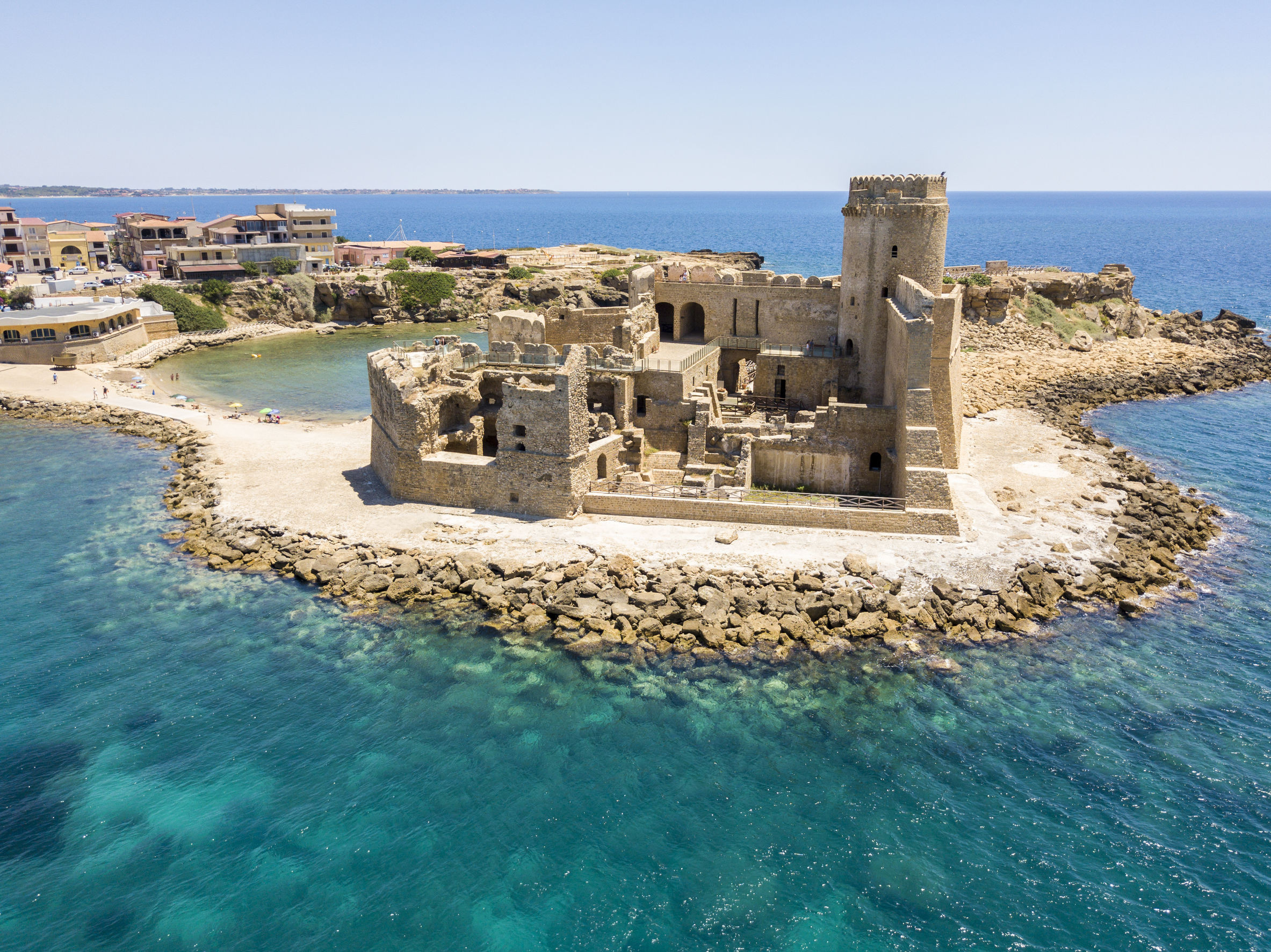
The Aragonese fortress rising from the shallow water at Le Castella is not just picturesque. It is the visible summary of the coast's defensive and frontier history, and one of Calabria's rare places where monument and marine setting are completely inseparable. Even on a short stay, this is not optional.
Inland
The Crotone museum
The Museo Nazionale di Crotone is the essential companion visit to Capo Colonna. Its most significant holding is the Tesoro di Hera Lacinia — the votive treasure recovered from the sanctuary — which gives the objects from the site their full sacred context and makes the museum the interpretive key to the promontory. Visit both on the same day.
Ionian · Sibaritide and northern Ionian
Costa degli Achei
The Costa degli Achei is among Calabria's richest heritage coasts because it combines easy beach towns with the Sibaritide, Rossano's Codex, Corigliano's castle, Abbazia Florense, and a rich hill-town interior.
Worth Knowing
Best for family trips that still want substance
Because the beach stay is easy and the history is major, this is one of the few coasts where a family-style sea holiday can carry real cultural weight. Broad sands and easy entry, major archaeology and a first-rank UNESCO manuscript within ordinary driving range. That alignment of logistics and significance is rare.
Worth Knowing
Let the coast and interior alternate
The district rewards you when you resist doing only beach or only archaeology. The real payoff comes from alternating plain, coast, manuscript town, castle, hill village, and one longer inland day — Abbazia Florense or MACA both repay a proper half-day rather than a rushed stop.
Sibari is the central argument for choosing this coast if culture matters. The stacked urban histories of Sybaris, Thurii, and Copia give the plain a weight that transforms the whole beach district. The Museo Archeologico Nazionale della Sibaritide is a separate stop from the park itself — the Toro Cozzante at its centre is one of the defining objects of Magna Graecia in Calabria — and the two together are the full visit, not interchangeable parts.
Abbazia Florense at San Giovanni in Fiore introduces Gioacchino da Fiore and a completely different medieval register — the Liber Figurarum, one of the great expressions of medieval figurative theology rendered through intricate symbolic diagrams, is housed here. Roseto adds the sea-and-castle emblem that gives the coast one of its most memorable visual identities. MACA in Acri gives the northern hinterland an unexpected contemporary stop through the glass-fusion work of Silvio Vigliaturo.
The Sites
Rossano, the Codex Purpureus, and Corigliano castle
Rossano supplies the manuscript treasure, Corigliano the castle and urban power. The Codex Purpureus Rossanensis is a UNESCO Memory of the World manuscript — 188 sheets of purple-dyed parchment in silver and gold ink, dating to the 6th century, containing some of the oldest surviving depictions of the life of Christ in any Greek manuscript. The Castello Ducale at Corigliano is among the most complete aristocratic interiors surviving in the region: helicoidal staircase with frescoes, Salone degli Specchi, and intact 19th-century kitchens.
Inland
Cerchiara, the Pollino geopark edge, and the hill-town belt
The inland towns above the plain give the coast multiple elevations and identities. Cerchiara di Calabria hosts the Bifurto Abyss (Fossa del Lupo) — at 683 metres one of the forty deepest sinkholes in the world — a site registered in the Pollino UNESCO Global Geopark's official geosite inventory. The northern Ionian gets much stronger once the hill belt is treated as part of the same itinerary rather than a separate region.
UNESCO Heritage
UNESCO in Calabria is a real trip-planning tool
Calabria holds more UNESCO designations than most visitors expect. The region carries active UNESCO recognition across six distinct categories: two Global Geoparks, three Natural World Heritage beech-forest components, a Man and the Biosphere reserve, a Memory of the World manuscript, multiple Intangible Cultural Heritage inscriptions, and a UNESCO Learning City. These designations are not distributed randomly — they cluster along the same coasts and massifs that already make the strongest case for heritage travel.
Why it matters
Knowing which designation belongs to which coast turns the itinerary logic from loose associations into a concrete map.
Tentative List
Cattolica di Stilo, Gerace, and the Baptistery of Santa Severina are the three Tentative List components most directly accessible from a coastal itinerary.
Planning signal
Tentative List status means formal candidacy is active even before full inscription, so these sites already carry internationally recognised significance for a culture-focused itinerary.
Calabria's historical depth in plain terms — what makes it different, what's genuinely significant.
01What makes Calabrian history different from the rest of southern Italy?
Calabria sat at the intersection of Greek colonisation, Byzantine administration, Norman conquest, and Aragonese fortification — and all four traditions survived in different parts of the coast rather than being displaced by a single later culture. The result is a region where a Greek temple promontory, a Byzantine cave church, a Norman cathedral, and an Aragonese fortress can sit within 30 kilometres of each other. Magna Graecia is especially important here: Sybaris, Kroton, Locri, Kaulon, and Rhegion were among the wealthiest cities of the ancient Greek world.
02What is the Codex Purpureus Rossanensis?
A 6th-century illuminated Gospel manuscript — 188 sheets of purple-dyed parchment written in silver and gold ink, considered a unicum in Byzantine manuscript production. UNESCO inscribed it in the Memory of the World Register in 2015. Its 14 illuminations include some of the oldest surviving depictions of the life of Christ in any Greek manuscript. It is housed in the Diocesan Museum in Corigliano-Rossano and is the defining object of the entire northern Ionian heritage circuit.
03How significant are the Bronzi di Riace?
They are widely considered the finest surviving examples of original Greek bronze sculpture anywhere in the world. Recovered from the Ionian seabed near Riace in 1972, they are displayed at the MArRC in Reggio Calabria and are the primary reason the museum ranks among the Mediterranean's most important. Their significance is not regional — they are genuinely among the great objects of antiquity.
04What UNESCO designations does Calabria hold?
More than most visitors expect: two UNESCO Global Geoparks (Pollino and Aspromonte), three Natural World Heritage components covering ancient primeval beech forests, a Man and the Biosphere reserve (the Sila plateau), a Memory of the World manuscript (the Codex Purpureus Rossanensis), multiple Intangible Cultural Heritage inscriptions including the Varia di Palmi and transhumance, and a UNESCO Learning City (Reggio Calabria). Three sites are also on Italy's UNESCO Tentative List: the Cattolica di Stilo, Gerace, and the Baptistery of Santa Severina.
Choosing a coast
Which coast matches the kind of history you're actually looking for.
01Which coast has the best archaeological sites?
The Costa degli Achei (Sibaritide, Rossano) and the Costa dei Gelsomini (Locri, Kaulon, Gerace) are the two best archaeology coasts. The Costa dei Saraceni (Capo Colonna, Crotone museum) is the most dramatically concentrated. If you want one coast with archaeology, manuscript heritage, and a major castle stop all within range, the Costa degli Achei is usually the best single answer.
02Which coast is best for a first-time history traveller?
The Costa degli Aranci (Soverato and Scolacium area) is often the most forgiving first choice — Scolacium is exceptional, the Cassiodorus sites add unusual intellectual depth, and Taverna with its Mattia Preti paintings is accessible without complex logistics. The Costa degli Dei (Tropea area) also works well for first-timers who want culture integrated into a beach-famous district without heavy inland commitment.
03Where are the best museums?
The MArRC in Reggio Calabria is the single most important — the Bronzi di Riace alone justify a visit from anywhere in the region. The Museo Nazionale della Sibaritide (for the Toro Cozzante and the Magna Graecia collection) and the Museo Nazionale di Crotone (for the Tesoro di Hera Lacinia) are the two leading regional archaeology museums. For art, the Museo Civico di Taverna is the defining stop.
04Is the Costa Viola worth visiting for history rather than just scenery?
Yes, decisively. The MArRC and the Bronzi make it one of the region's great culture coasts. Scilla adds a complete sea-and-village-and-castle tableau. Pentedattilo gives it an inland dramatic counterpoint. And three separate UNESCO designations cover the district — Aspromonte Geopark, Varia di Palmi, Reggio Learning City. The coast's scenery is famous; its cultural depth is consistently underestimated.
Planning the visit
Practical questions about visiting Calabria's heritage sites from the coast.
01How much time do I need for the main sites?
The MArRC and the Bronzi deserve a full half-day minimum. Scolacium is a relaxed two to three hours. Capo Colonna and Le Castella can be combined in a half-day. The Sibaritide — park plus museum — takes the better part of a day if you do both properly. Gerace and the Cattolica di Stilo can be combined in a single inland day from the Costa dei Gelsomini. Plan one serious culture day per coast section rather than trying to reach across multiple districts.
02Do I need a car to reach the main heritage sites?
Yes, for the vast majority of stops a car is essential. Scolacium, the Sibaritide, Capo Colonna, Gerace, Taverna, the Certosa di Serra San Bruno, and Pentedattilo all require driving. The MArRC in Reggio Calabria is the main exception — reachable by train and on foot from the seafront. Most heritage sites are well signposted once you're in the right area.
03Can I combine beach days and heritage days without too much driving?
Yes, on the right coasts. The Costa degli Aranci (beach plus Scolacium or Taverna), the Costa degli Achei (beach plus Sibaritide or Rossano), and the Costa degli Dei (beach plus Tropea old town or Pizzo) all allow genuine sea-and-culture combinations without excessive transfers. The key is choosing the right coast rather than trying to commute between distant districts.
04Are heritage sites open in summer, and do I need to book?
The major sites — MArRC, Sibaritide, Capo Colonna, Scolacium — are open in summer, though hours shift seasonally and some close on Mondays. For the MArRC in particular, advance booking is advisable in peak season. Smaller sites and monasteries like the Certosa di Serra San Bruno have more variable schedules. Always check directly before making a special trip.
Art and living culture
Beyond archaeology — Calabria's art, craft, and living traditions worth seeking out.
01Who is Mattia Preti and why does he matter in Calabria?
Mattia Preti (1613–1699) was born in Taverna in the Calabrian interior and is one of the major figures of Italian baroque painting — his work bridges Caravaggio's chiaroscuro and the decorative baroque of Naples and Malta. The Museo Civico di Taverna holds the finest concentration of his Calabrian paintings, including large canvases that remain in the town they were made for. It is one of the few places in Italy where a major baroque painter's work is still displayed in its original regional context.
02Is there a contemporary art scene worth seeking out?
Yes. MUSABA at Mammola (Costa dei Gelsomini district) is one of southern Italy's most unusual contemporary art environments — a park-museum built by Nik Spatari and Hiske Maas over decades, combining monumental fresco, sculpture, and architecture in a forested inland valley. MACA in Acri (behind the Costa degli Achei) focuses on contemporary glass-fusion work by Silvio Vigliaturo. Both sit inland and are accessible from coastal stays.
03Are there traditional craft traditions worth seeking out?
Several. The ceramics of Seminara (Costa Viola district) represent one of Calabria's most distinctive living craft traditions. The luthiers of Bisignano (inland from the Costa degli Achei) have maintained a violin and string-instrument making tradition for centuries. The textile weaving traditions of Longobucco and other inland centres are among the most persistent artisanal legacies in the region. These are working crafts with genuine continuity, not tourist performances.
04What festivals have real cultural significance rather than just tourist appeal?
The Varia di Palmi (last Sunday of August, Costa Viola) is UNESCO-inscribed and one of the most visually complete processional events in southern Italy — a 17-metre structure carried by 200 bearers representing the Assumption. The Festa Medioevale di San Giorgio Morgeto takes place in mid-August. The Byzantine festivals of the Grecanica area (Costa dei Gelsomini, late summer) carry living liturgical significance for the Griko-speaking communities. The Festa della Madonna di Polsi in the Aspromonte (September) is one of Calabria's most deeply rooted religious gatherings. These are events worth building a stay around.


 calabriastraordinaria.it
 calabriastraordinaria.it